
Your Fort Canning Park Map for the Ultimate All-Day Outing

Looking for the perfect way to spend a full day outdoors in the heart of Singapore? Look no further than Fort Canning Park, an iconic hilltop park where history, nature, and recreation blend seamlessly.
Whether you’re a curious tourist, an urban explorer, or a resident seeking a peaceful green escape, this national treasure has something for everyone. But with its many gardens, trails, and heritage landmarks, planning is essential.
This guide will walk you through the best things to see and do in Fort Canning Park, how to get there, when to visit, what to eat, and how to experience everything the park offers. Use the official Fort Canning Park overview by NParks as your key reference point.
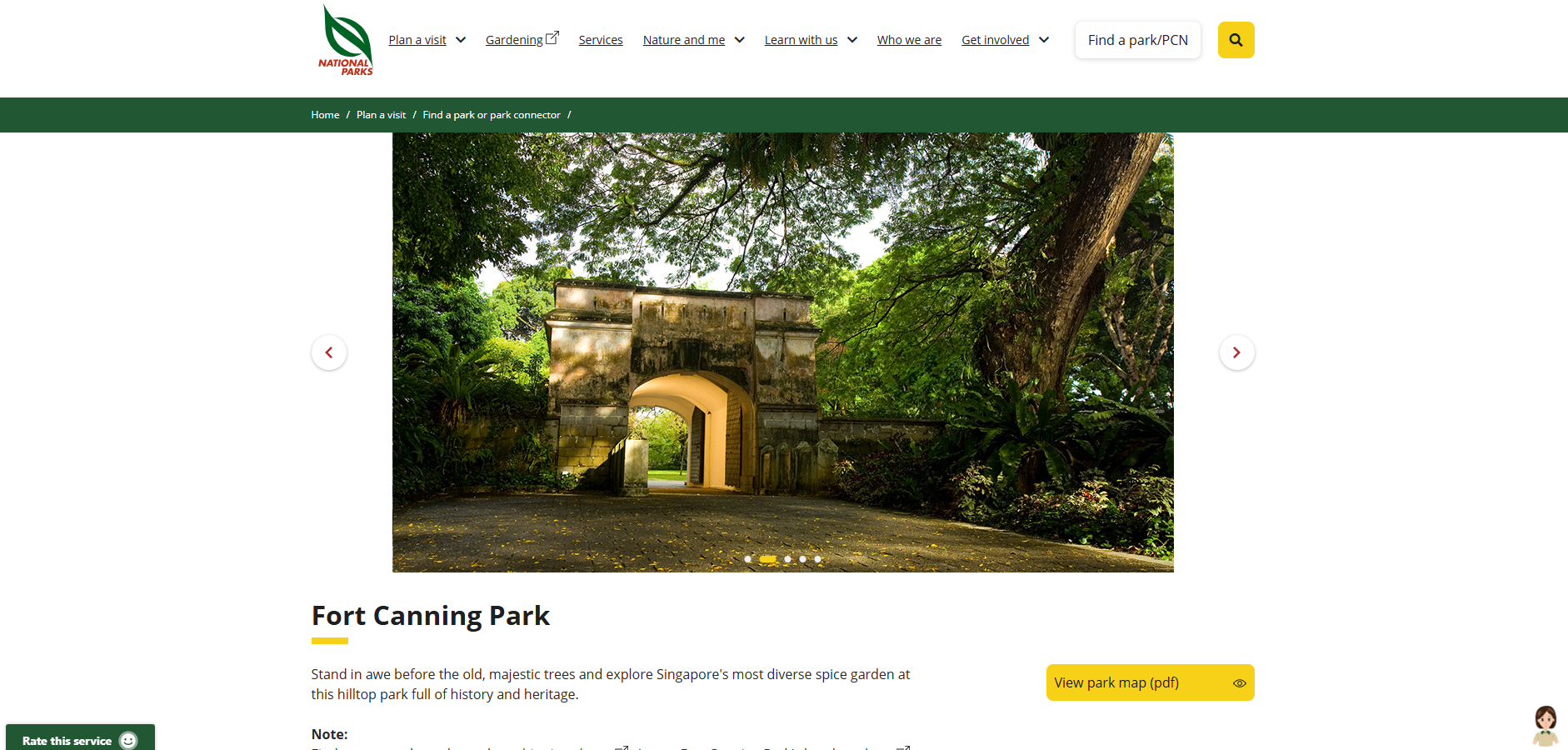
Fort Canning Park Overview
Fort Canning Park is more than just a hilltop park. It is one of Singapore’s most historically rich and culturally significant urban green spaces.
Once known as Government Hill, this site has evolved through the ages, from being the seat of ancient Malay royalty in the 14th century to a strategic military post under the British army barracks. Now, the site has become a national heritage park maintained by the National Parks Board.
Quick Facts and Figures
-
Location: Bordered by River Valley Road, Hill Street, Bras Basah Road, and Clemenceau Avenue
-
Size: Approximately 18 hectares
-
Historical Timeline:
-
14th Century: Believed to be the residence of Sang Nila Utama, founder of Singapura
-
1819–1823: Became the base of colonial administration after Stamford Raffles’ landing
-
1859: Fortification completed, including the construction of Fort Canning
-
World War II: Housed the Far East Command Centre, where British troops planned wartime defence
-
1981: Officially gazetted as Fort Canning Park
-
The park is home to numerous historical buildings, landmarks, and trails that narrate Singapore’s transformation from ancient seaport to British colony to modern metropolis.
Why It Matters Today
Fort Canning Park is a “green lung” in the urban core of Singapore, just minutes away from Orchard Road and the National Museum of Singapore. It is a multi-use area where families, nature lovers, art enthusiasts, and history buffs come together.
With rejuvenated attractions like the Sang Nila Utama Garden, Pancur Larangan, and Fort Canning Green, visitors of all ages can experience nature, heritage, and leisure in one location.
What’s Special About the Fort Canning Experience?
-
Explore remnants of the British army barracks, the flagstaff, and the iconic Fort Canning Tree Tunnel
-
Discover nine themed historical gardens, including the Spice Garden, Farquhar Garden, and George V Jubilee Park
-
Walk through curated nature trails featuring heritage trees, artefacts, and indigenous flora
-
Attend concerts, performances, and festivals at the scenic Fort Canning Green
-
Multiple entrances from major MRT stations, including Fort Canning, Dhoby Ghaut, and Clarke Quay
For a complete overview of the grounds and features, download the official Fort Canning Park map (PDF) from NParks to enhance your visit and ensure you don’t miss any hidden gems.
How To Get There
Getting to Fort Canning Park is remarkably convenient, with various transport options ensuring smooth access from any part of Singapore.
-
MRT (Mass Rapid Transit):
-
Fort Canning MRT Station (Downtown Line): Exit B or C leads directly to Jubilee Park, part of the Fort Canning Trail network.
-
Dhoby Ghaut MRT Station (North-South, North-East, and Circle Lines): A 5-minute walk to the Canning Rise entrance.
-
Clarke Quay MRT Station (North-East Line): Use Exit E and walk along River Valley Road.
-
-
Bus Services: Buses that stop along River Valley Road, Hill Street, and Penang Road provide easy access. These include bus numbers 32, 54, 139, and 195.
-
Driving or Taxi: The park’s address is 70 River Valley Road, Singapore 179037. Nearby parking options include the Fort Canning Park Car Park A and B, and public lots along Clemenceau Avenue and Hill Street.
-
Walking Access: If you’re staying nearby in Orchard Road, Bugis, or the Civic District, a 10–15 minute walk brings you to various Fort Canning entrances, including Canning Rise, Dhoby Ghaut, and Jubilee Park.
When You Should Go
Fort Canning Park is open 24/7, but the experience of exploring its expansive grounds varies with the time of day and season.
-
Best Time to Visit:
-
Morning (7:00 am to 10:00 am): Enjoy cooler temperatures, minimal crowds, and bird calls echoing from the trees. This time is ideal for peaceful walks or jogging along the nature trails.
-
Late Afternoon (4:00 pm to 6:30 pm): Sunlight filters through the canopies, providing perfect lighting for photography, especially at the Fort Canning Tree Tunnel.
-
Evenings & Weekends: Check the NParks website or subscribe to email updates for concerts, movie nights, or community events held at Fort Canning Green.
-
-
Weather Considerations: While Singapore is tropical, Fort Canning’s elevated location provides a slight temperature reprieve. However, it’s best to avoid midday visits (12 pm to 3 pm) due to the heat. Carry drinking water, sunscreen, and umbrellas during monsoon months (November to January, June to August).
-
Public Holidays and School Breaks: During festive periods and long weekends, expect increased footfall, especially among families, kids, and tourists. Early arrival ensures a quieter, more contemplative experience.
It is recommended that you download a digital version of the Fort Canning Park map or pick one up at the Fort Canning Centre. Guide your timing and optimise your visit around featured attractions like George V Jubilee Park, Pancur Larangan, and the Fort Canning Heritage Gallery.
What You Can Do
Visiting Fort Canning Park offers an immersive journey through Singapore’s history, lush greenery, and artistic culture. With a well-planned Fort Canning Park map, you can easily locate and enjoy the park’s best features, from ancient relics to Instagram-famous photo spots.
Take in the Historical Landmarks
At the heart of the Fort Canning experience is its rich tapestry of landmarks, each with a centuries-old story. Begin at the Battle Box, a restored underground military bunker and former Far East Command Centre used during World War II.
This atmospheric site reveals how British commanders surrendered Singapore to the Japanese in 1942, a pivotal moment in the region’s history.
Next, stop by Raffles Terrace, where you’ll find the historical flagstaff, the remnant of the signalling station used to relay ship movements from the harbour. Close by stands Raffles House, a replica of the first residence of Stamford Raffles, founder of modern Singapore.
Also look out for:
-
The 9-Pound Cannon, symbol of colonial military might
-
The Archaeological Dig Site, uncovering evidence from the 14th-century Malay kingdom
-
The Keramat Iskandar Shah, shrine to the last ruler of Singapura before the fall to the Majapahit empire
These locations showcase how Fort Canning evolved from a royal seat to a strategic colonial hill into a preserved heritage space for all.
Wander Through All Nine Gardens
Using the Fort Canning Park map, visitors can explore nine beautifully restored gardens, each themed around different eras and cultural influences:
-
Sang Nila Utama Garden: Featuring Javanese-style gateways and lotus-filled pools, this garden pays homage to Sang Nila Utama, the prince who named Singapore. It is a true spot for peaceful reflection.
-
Raffles Garden: Home to rare flora once collected by Stamford Raffles, founder of Singapore’s first botanic garden.
-
Farquhar Garden: Named after William Farquhar, this garden showcases useful tropical plants and medicinal herbs from colonial times.
-
Spice Garden: Inspired by early spice plantations, this garden brims with nutmeg, clove, and laksa leaves. It is a sensory delight and homage to Singapore’s early trade economy.
-
Artisan’s Garden: Set on an archaeological site, this garden celebrates the craftsmen of the 14th-century kingdom.
-
Jubilee Park (George V Jubilee Park): Ideal for kids and families, with interactive play spaces and gentle slopes.
-
Pancur Larangan: Also known as the Forbidden Spring, this site was once considered a royal bathing place for ancient queens.
-
Armenian Street Park and First Botanic Garden Site: These connect the hilltop park with surrounding districts like the National Museum of Singapore, extending the experience beyond the park’s borders.
Each garden represents a different account of Singapore’s past and is connected via tranquil nature trails, making it easy to experience them all in one visit.
See a Show at Fort Canning Green
If there’s one location that brings stories to life through performance, it’s Fort Canning Green. Once a Christian cemetery (1822–1865), this open lawn is now a cultural hub that hosts:
-
Shakespeare in the Park by Singapore Repertory Theatre
-
Jazz and classical concerts, often with free admission
-
Outdoor cinema nights for couples and families
Bring a picnic mat and snacks, and enjoy unforgettable evenings under the stars. Events are often free or ticketed at affordable rates. Keep an eye on NParks’ official Fort Canning events page and subscribe via your email address for updates.
Explore Fort Canning Heritage Gallery
Housed in the Fort Canning Centre, the Heritage Gallery is your one-stop spot to understand the full story of the hill. It offers permanent and rotating exhibitions, presenting artefacts and insights from:
-
The 14th-century Malay kingdom of Temasek
-
The colonial takeover under Stamford Raffles and William Farquhar
-
The wartime transformation into the British army barracks and command post
-
Modern-day conservation and ecological rebirth
Interactive panels and digital displays engage both adults and children, while free tours provide guided storytelling by local experts. Booking may require registration, so ensure your email and password are ready if you access online ticketing systems.
Take a Selfie or Two at Fort Canning Tree Tunnel
No visit is complete without a photo at the iconic Fort Canning Tree Tunnel. This Instagram-famous spiral staircase is flanked by towering trees and bathed in filtered sunlight, a picturesque spot that appears almost enchanted.
It connects the underground Dhoby Ghaut entrance to the main park grounds and is busiest between 10 a.m. and 2 p.m. For fewer crowds, head there before 9 a.m. or after 4 p.m.
Quick tips:
-
Use wide-angle mode to capture the curve and canopy
-
Be respectful—queues can form quickly
-
Hold onto the handrails for safety, especially when descending
It’s one of the most photographed locations in Singapore, and rightly so.
Stroll Down the Fort Canning Nature Trails
Explore the serene nature trails winding through the Fort Canning slopes to round off your visit. These pathways connect major landmarks, gardens, and secret corners of the hill and are best explored using the official Fort Canning Park map.
Key trails include:
-
Spice Trail – Immerses you in the scents and origins of the region’s trade history
-
Heritage Trail – Covers the ancient settlement, British military era, and WWII history
-
Trees of the Fort Walking Trail – Showcases 6 of the park’s nine registered heritage trees
Along the way, you’ll find:
-
Drinking water stations
-
Shaded rest areas
-
Educational plaques with QR codes linking to in-depth content
Many trails are wheelchair- and stroller-friendly, and guided tours (with optional tickets) are available for school groups, tourists, and families.
What Should You Eat First?
Exploring Fort Canning Park is bound to work up an appetite. Fortunately, you’ll find excellent dining options right at the foot of the hill. Each has its charm and offerings. Whether you’re craving hearty brunch fare, fresh pastries, or garden-inspired cuisine, there’s something for everyone.
Le Jardin
Located near the entrance of Fort Canning Park’s Canning Rise and beside the Fort Canning Centre, Le Jardin is a European-style café that offers a tranquil, garden-themed dining experience.
Surrounded by foliage and Parisian aesthetics, this romantic venue is a top pick for brunch or midday meals during your visit to Fort Canning Park.
|
Menu |
Crab Linguine, Lavender Latte, Hazelnut Latte, and other French desserts, and more |
|
Price Range |
S$25–40 |
|
Website |
Tiong Bahru Bakery Foothills
Just a few steps from Jubilee Park at the foot of Fort Canning, this beloved Tiong Bahru Bakery outlet is a haven for pastry lovers and those on the go.
With indoor and outdoor seating, it’s a great place for breakfast before heading up the hill or for a coffee break after exploring the Fort Canning Nature Trails.
|
Menu |
Signature butter and almond croissants, quiches, sandwiches, iced mochas, coffee, tea, and more |
|
Price Range |
S$4.50–20 |
|
Website |
Conclusion
To sum up, your Fort Canning Park map is your companion for a well‑planned, all‑day outing in Fort Canning Park. From the park’s 14th‑century origins with Sang Nila Utama through the colonial British army barracks, themed gardens, heritage trees, trail walks, performances at Fort Canning Green, and engaging things to see and do, it is a place combining nature and history within the city district.
Keep your email address handy if you need to register for tours or book tickets at NParks, and check for updates on guided tours or events via the official NParks website. Keep the password in mind (if any access code is needed for booking), and use the address provided by NParks to visit easily.
Even if you’re a resident looking for weekend enjoyment or a visitor, Fort Canning gives you the perfect mix of stories, gardens, trails, landmarks, and delicious local fare — all in one unforgettable day in Singapore.
Related guides

About the author
Chloe Lim · Food & Lifestyle Editor
Chloe covers Singapore's dining, beauty, and lifestyle scene — eating and testing her way across the island so her picks are ones she'd send a friend to.